
What Is an Expansion Tank on a Boiler?
March 04, 2026
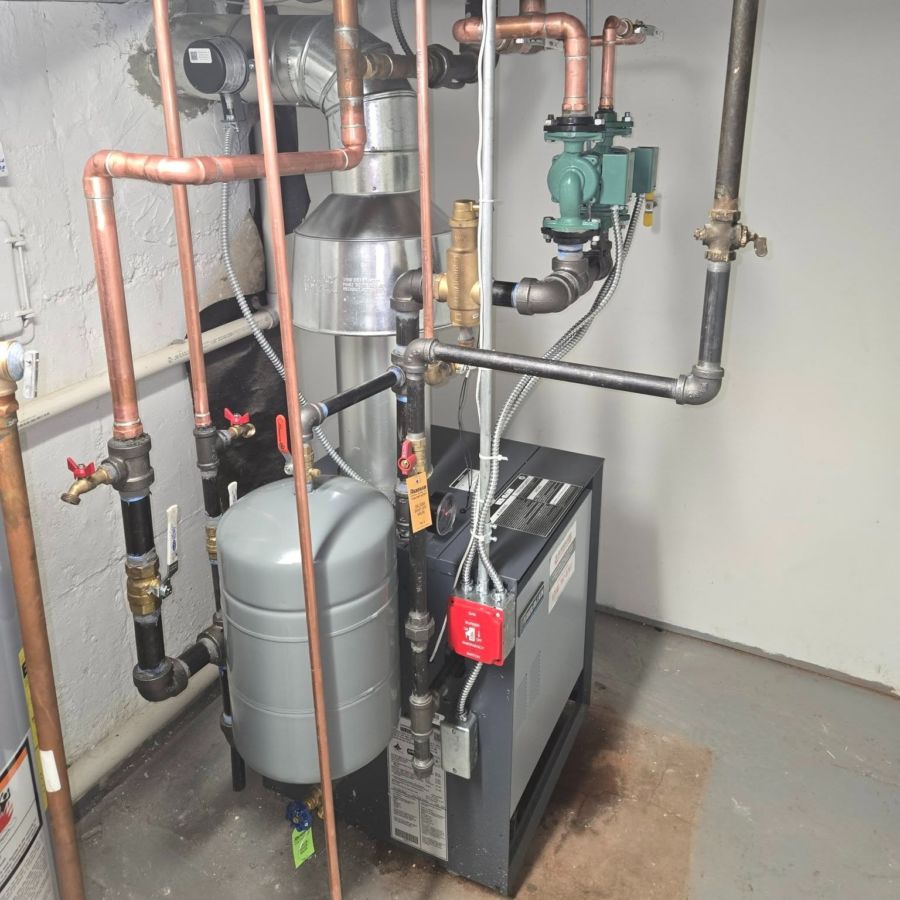
Wondering how you can maximize your boiler's life? Understanding how it works helps with this, and one of the most important components is the expansion tank. But just what is an expansion tank, and why is it so essential?
Expansion tanks ensure your boiler operates safely by accommodating pressure changes. Otherwise, pressure would continue to build up, eventually causing your relief valve to discharge. To give you a better idea of what an expansion tank does, we'll cover:
- Understanding expansion tanks
- The function of an expansion tank in boiler systems
- Is an expansion tank required for a boiler?
- Types of expansion tanks for boiler systems
- How to maintain an expansion tank for optimal performance
Read on to learn more about what an expansion tank does for a boiler and how to ensure it's working correctly.
Having Problems With Your Boiler’s Expansion Tank? Call Ranshaw for Excellence Every Time
Don't delay boiler repair. Schedule today to take advantage of our honest and upfront prices. Our trained technicians can diagnose and repair expansion tank issues in all boiler brands and models.
Understanding Expansion Tanks
Boilers are sealed to retain water and heat inside for maximum efficiency. However, this closed design presents problems when water expands due to temperature changes experienced during regular operation.
Releasing water relieves the pressure, but this would also reduce efficiency, leading to poor performance and higher energy bills. The expansion tank avoids this entirely by creating extra space for the expanding water.
An expansion tank improves how your boiler works and helps reduce strain on the pipes and other components. It helps lengthen your boiler's lifespan and reduces the risk of costly mechanical failures.
The Function of an Expansion Tank in Boiler Systems
Water is unique in that it expands both when it forms into ice and when it heats up. In fact, its volume increases by 4% when its temperature rises from 40 degrees F to 200 degrees F. While this doesn't sound like much, it only takes a slight increase in a closed system like a boiler to cause strain.
Expansion tanks contain air or another gas, which, unlike water, is easily compressed. When water expands, it pushes into the gas, relieving the pressure. This avoids issues like loud noises and damage to pipes and valves.
Is an Expansion Tank Required for a Boiler?
Boilers feature a pressure relief valve that releases water if the pressure passes a hard limit. However, New York codes also mandate that an expansion tank is required for hydronic boilers. This is a good thing because it adds another layer of safety.
However, expansion tanks have some additional benefits. By regulating pressure without releasing water, they avoid frequent refilling, limiting mineral buildup and corrosion. Efficiency also remains optimal at all times, reducing the boiler's environmental impact and running costs.
Types of Expansion Tanks for Boiler Systems
Two main expansion tank types are found in home boilers: diaphragm/bladder and compression.
Diaphragm Tanks
Diaphragm tanks feature a flexible bladder that separates the air and water. The air side acts like a cushion that compresses to maintain optimal pressure.
Pros:
- Minimal air recharging needed
- Reliable performance
- Compact form factor
Cons:
- Diaphragm may need replacement after several years
Compression Tanks
Compression tanks employ an older design with just a simple chamber and no separation of air and water.
Pros:
- Reliable, simple design
Cons:
- Regular maintenance needed
- Larger size
Diaphragm tanks are usually the norm these days. However, compression tanks still deliver dependable performance and are still out there.
How to Maintain an Expansion Tank for Optimal Performance
Maintenance ensures your expansion tank is working as intended, and checking the pressure monthly is one of the most important tasks. Optimal pressures vary by boiler model but should generally be less than 30 psi.
You should also check the air charge at least annually, as your expansion tank needs air to function. You can do this by turning off the system, isolating the tank from the system and using a tire pressure gauge on the Schrader valve at the top of the tank.
If you hear loud banging noises, see leaking water, or spot any signs of expansion tank corrosion or damage, your boiler needs immediate professional attention.
Trust Ranshaw With Your Boiler Repairs Today
Leave boiler repair to the experts. With 60+ years of experience, you can trust Ranshaw to get the job done right the first time when your heat goes out.